

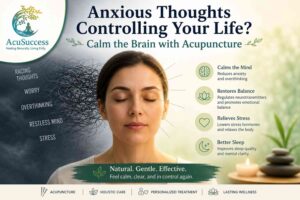
Daily life stimulates our minds nonstop. From incessant notifications to work deadlines, financial worries, relationship stress, sleep deprivation, and emotional overwhelm. Our minds can get stuck in an exhausting loop of anxious thoughts we feel we can’t escape. Anxiety is more than just “stress” or “worry” for many of us. Chronic anxiety can make it hard to sleep, focus, feel good, digest food, have energy, or live your life to the fullest.
When we are constantly flooded with overstimulation our nervous system gets wired up: Racing thoughts, increased heart rate, muscle tension, inability to relax. Your body becomes caught in fight or flight mode. If left unchecked, this can lead to chronic stress, insomnia, panic attacks, fatigue, irritability, burnout and more.
Acupuncture at Dr. Lee AcuSuccess provides you with a natural solution to help regulate your nervous system. Calming the stress hormones and helping you return to emotional equilibrium. Acupuncture doesn’t just temporarily cover up symptoms, we go straight to the source to help treat the underlying causes of your anxiety.
Understanding Anxiety and Overactive Thoughts
Anxiety affects both the mind and body. While occasional stress is normal, persistent anxiety can interfere with daily functioning and emotional well-being.
Common symptoms include:
- Racing thoughts
- Constant worry or overthinking
- Difficulty sleeping
- Tightness in the chest
- Rapid heartbeat
- Irritability or mood swings
- Brain fog and poor concentration
- Muscle tension
- Digestive discomfort
- Fatigue and emotional exhaustion
Some people say anxiety makes them feel like they are “stuck in their head”. Even when you are sitting quietly your brain is still scanning the environment for danger, problems, and worst case scenarios. This occurs because your sympathetic nervous system is on overdrive. Your fight or flight response is active when it shouldn’t be.
How Acupuncture Helps Calm the Brain
Acupuncture has been used for centuries in Traditional Chinese Medicine to restore balance throughout the body. Today, modern neuroscience also supports its role in nervous system regulation and stress reduction.
Research shows that acupuncture influences several important systems involved in anxiety:
1. Regulates the Nervous System
Acupuncture helps shift the body away from sympathetic dominance and activates the parasympathetic nervous system, often called the “rest and digest” state.
This shift can help:
- Slow the heart rate
- Relax tense muscles
- Reduce shallow breathing
- Improve digestion
- Promote emotional calmness
- Improve sleep quality
When the parasympathetic system becomes active, the body feels safe again. This allows the mind to slow down naturally.
Acupuncture and Neurotransmitters
One of the most important ways acupuncture supports mental wellness is through its effect on neurotransmitters and brain chemistry.
GABA and Anxiety Reduction
GABA, or gamma-aminobutyric acid, is the brain’s primary calming neurotransmitter. It helps quiet excessive brain activity and reduce overstimulation.
Low GABA activity is associated with:
- Anxiety disorders
- Panic attacks
- Insomnia
- Chronic stress
- Restlessness
Acupuncture may help increase GABA activity, allowing the brain to relax more effectively.
Serotonin and Emotional Stability
Serotonin plays a major role in mood regulation, emotional balance, and sleep. Acupuncture has been shown to support serotonin production naturally, helping improve emotional resilience and reduce feelings of overwhelm.
Endorphins and Natural Relaxation
Acupuncture also stimulates the release of endorphins, the body’s natural feel-good chemicals. These compounds help reduce stress and create a sense of calm and well-being.
Scientific Research Supporting Acupuncture for Anxiety
Modern studies continue to explore the neurological effects of acupuncture on anxiety and stress disorders.
Research has shown that acupuncture may:
- Lower cortisol levels
- Reduce heart rate and blood pressure
- Improve heart rate variability
- Enhance relaxation responses
- Improve sleep quality
- Reduce symptoms of generalized anxiety disorder
Multiple studies show marked improvement in anxiety following acupuncture. One meta-analysis showed acupuncture significantly improved anxiety symptoms. (Errington et al. 20 21) Some studies propose acupuncture affects mechanisms involved in GABA regulation and autonomic nervous system imbalance.
Researchers found significant decreases in physiological stress markers after acupuncture. (Liu et al. 20 20)
Patients often describe this as feeling calmer, clearer, more emotionally stable and less reactive to stress.
How Anxiety Impacts the Entire Body
Anxiety is not only emotional. It affects multiple systems throughout the body.
Sleep Problems
An overactive nervous system often makes it difficult to fall asleep or stay asleep. Many people experience racing thoughts at night, waking frequently, or feeling tired even after sleeping.
Acupuncture helps regulate the autonomic nervous system and promote deeper relaxation, which may improve sleep quality naturally.
Digestive Issues
The brain and gut are closely connected. Anxiety can contribute to:
- Bloating
- Nausea
- Acid reflux
- Irritable bowel symptoms
- Appetite changes
By calming the nervous system, acupuncture may help improve digestive function as well.
Brain Fog and Poor Focus
Chronic stress can impair concentration, memory, and mental clarity. Patients often describe feeling mentally exhausted or unable to focus.
Acupuncture may improve circulation and help regulate stress-related brain activity, which can support clearer thinking and cognitive function.
What Happens During an Acupuncture Session?
For individuals new to acupuncture, the process is often much gentler and more relaxing than expected.
During treatment:
- Thin, sterile needles are placed at specific acupuncture points
- Most patients feel minimal discomfort
- Sessions usually last 30 to 60 minutes
- Many patients feel deeply relaxed during treatment
Some individuals even fall asleep during sessions because the nervous system begins shifting into a calmer state.
Traditional Chinese Medicine Perspective on Anxiety
In Traditional Chinese Medicine, anxiety is viewed as an imbalance affecting the body’s energy systems.
Emotional stress may disrupt the balance of organs such as:
- Heart
- Liver
- Kidney
- Spleen
For example:
- Liver imbalance may contribute to irritability and emotional tension
- Heart imbalance may cause insomnia and restlessness
- Kidney imbalance may contribute to fear and chronic exhaustion
Acupuncture aims to restore harmony between these systems rather than simply suppressing symptoms.
This holistic approach is one reason many people seek acupuncture for long-term emotional wellness.
Conditions Commonly Treated Alongside Anxiety
Anxiety often occurs together with other physical or emotional conditions. Acupuncture is frequently used to support individuals dealing with:
- Chronic stress
- Insomnia
- Panic attacks
- Depression symptoms
- PTSD-related symptoms
- Fatigue
- Hormonal imbalance
- Chronic pain
- Digestive disorders
- Headaches and migraines
Because acupuncture treats the body as an interconnected system, it may help improve multiple symptoms simultaneously.
Acupuncture for Stress and Burnout
Burnout has become increasingly common in modern society. Constant mental stimulation and emotional pressure can leave people physically and emotionally drained.
Signs of burnout may include:
- Emotional exhaustion
- Lack of motivation
- Increased irritability
- Sleep disturbances
- Anxiety and overwhelm
- Difficulty concentrating
Acupuncture helps the body recover from chronic stress by supporting nervous system repair and restoring internal balance.
Many patients report feeling calmer, lighter, and mentally refreshed after treatment.
How Long Does It Take to See Results?
Every person responds differently depending on their stress levels, overall health, and severity of symptoms.
Some patients notice:
- Immediate relaxation after the first session
- Better sleep within a few treatments
- Reduced anxiety and mental clarity after several sessions
For chronic anxiety or long-standing stress patterns, practitioners often recommend a series of treatments over several weeks.
Many patients begin with weekly sessions to help the nervous system reset more effectively.
Why More People Are Choosing Natural Anxiety Relief
Many individuals today are searching for holistic anxiety treatments because they want approaches that support overall wellness without creating dependency.
Acupuncture has become increasingly popular because it:
- Supports the body naturally
- Promotes long-term nervous system balance
- Complements other wellness practices
- Encourages relaxation without sedation
- Addresses both physical and emotional symptoms
People often combine acupuncture with:
- Mindfulness practices
- Therapy or counseling
- Exercise
- Breathwork
- Healthy sleep habits
- Nutritional support
How Dr. Lee AcuSuccess Supports Patients With Anxiety
Individualized acupuncture treatments by Dr. Lee that can naturally help you to control anxiety, stress, insomnia, emotional imbalance….
We treat you, not a diagnosis. Everyone is different which means everyone has different symptoms and health history.
Patients seeking acupuncture for anxiety may receive support for:
- Stress management
- Nervous system regulation
- Sleep improvement
- Emotional balance
- Chronic tension and fatigue
- Mental clarity and relaxation
The goal is not only temporary relief but helping the body return to a healthier, calmer state over time.
The Brain on Anxiety vs The Brain in Balance
Think of the anxious brain like a car stuck in heavy traffic with constant honking, flashing lights, and tension. The nervous system remains alert, overwhelmed, and exhausted.
Acupuncture acts like a navigation system guiding the brain away from chaos and toward a calmer road.
Instead of remaining trapped in stress mode, the body begins to:
- Breathe more deeply
- Relax physically
- Think more clearly
- Sleep more peacefully
- Feel emotionally grounded
This is why many patients describe acupuncture as helping them “feel like themselves again.”
Lifestyle Tips to Support Acupuncture Treatment
Along with acupuncture, healthy daily habits can further support nervous system balance.
Prioritize Sleep
Consistent sleep helps regulate hormones, mood, and stress responses.
Reduce Stimulants
Excess caffeine and screen exposure may worsen anxiety symptoms in some individuals.
Practice Deep Breathing
Slow breathing activates the parasympathetic nervous system and encourages relaxation.
Stay Physically Active
Movement supports circulation, mood regulation, and stress reduction.
Create Quiet Moments
Meditation, mindfulness, journaling, or time in nature may help calm mental overstimulation.
Acupuncture and Emotional Wellness
Mental wellness is closely connected to physical health. When the body is chronically stressed, emotional symptoms often intensify.
Acupuncture supports emotional wellness by helping regulate:
- Stress hormones
- Sleep cycles
- Nervous system activity
- Blood circulation
- Neurotransmitter balance
This whole-body approach is one reason acupuncture continues gaining recognition as a supportive therapy for anxiety and stress management.
Is Acupuncture Safe for Anxiety?
When performed by a qualified practitioner, acupuncture is generally considered safe and well-tolerated.
Most side effects are mild and temporary, such as:
- Slight soreness
- Mild bruising
- Temporary fatigue after treatment
Patients often leave sessions feeling relaxed and calm.
If you are considering acupuncture for anxiety, it is important to work with a licensed and experienced acupuncture professional.
Final Thoughts
Living with anxiety can make your daily life exhausting, stressful and emotionally draining. When your brain never knows how to turn-off and recover from “fight or flight” mode your mental and physical health will struggle.
Acupuncture is a natural, drug-free way to calm your nervous system, regulate your stress response and regain emotional equilibrium. By helping to balance neurotransmitters such as GABA and serotonin and stimulating the parasympathetic nervous system, acupuncture may allow you to quiet your anxious mind and maintain inner wellness.
At Dr. Lee’s AcuSuccess, we create individualized acupuncture treatments tailored to help you feel calmer and sleep better, naturally reduce stress and take back control of your emotional health.
Don’t let anxious thoughts rule your life. Allow acupuncture to help restore the balance in your mind and body so you can find clarity and calm.
Frequently Asked Questions
Can acupuncture really help with anxiety and overthinking?
Yes. Acupuncture is commonly used to help reduce anxiety, racing thoughts, and chronic stress by regulating the nervous system and promoting relaxation. Many patients report feeling calmer, sleeping better, and experiencing improved emotional balance after treatment.
How does acupuncture calm the brain?
Acupuncture stimulates the nervous system to release calming neurotransmitters such as GABA, serotonin, and endorphins. It also helps reduce cortisol levels and shifts the body from “fight or flight” mode into a more relaxed parasympathetic state.
How many acupuncture sessions are needed for anxiety?
The number of sessions varies depending on the severity and duration of symptoms. Some patients feel relaxed after the first session, while others may benefit from 6 to 10 treatments to support long-term nervous system regulation.
Is acupuncture safe for stress and anxiety treatment?
When performed by a licensed and experienced practitioner, acupuncture is generally considered safe. Most people experience little to no discomfort during treatment and often feel deeply relaxed afterward.
Can acupuncture help with anxiety-related insomnia?
Yes. Acupuncture may help improve sleep quality by calming the nervous system, reducing racing thoughts, and promoting relaxation. Many patients seek acupuncture for insomnia linked to stress and anxiety.
Does acupuncture help with panic attacks?
Acupuncture may help support individuals dealing with panic attacks by regulating stress responses, calming the nervous system, and reducing physical symptoms such as rapid heartbeat, chest tightness, and restlessness.
What should I expect during an acupuncture session for anxiety?
During the session, very thin needles are placed at specific acupuncture points. Treatments are usually relaxing, and many patients feel calm or sleepy during the process. Sessions typically last between 30 and 60 minutes.
Can acupuncture improve brain fog and concentration?
Yes. By reducing stress and improving circulation, acupuncture may help support mental clarity, focus, and cognitive function. Patients often report feeling mentally refreshed after treatment.
One Response